Stem Cell Blog

Употребата на матичните клетки од папочна врвца рапидно се зголемува. Пред 10 години крвта од папочна врвца можеше да лекува околу 40 состојби, но денес таа бројка е над 80. Со нетрпение очекуваме нови терапии за болести и нарушувања како што се дијабет, аутизам и мозочен удар, можете да бидете во тек со најновите случувања во регенеративната медицина на нашиот блог за матични клетки.


where_can_stem_cells_be_found-1-1080x675-1.png

09/01/2024 BlogOther

Stem cells are the foundation of other cells in the body. They have the unique ability to differentiate into specialised cells with more specific functions such as brain cells, blood cells, heart muscle cells, or bone cells.


shutterstock_227260384-scaled-1.jpg

09/01/2024 Other

Cell Therapy for Multiple Sclerosis

Multiple Sclerosis (MS) is an auto-immune disease where the patient’s immune system attacks the myelin sheaths surrounding and protecting nerve fibres in the central nervous system. In June, a clinical trial began that plans to treat progressive MS with cord blood.


stemcell_freezing_cryo.png

09/01/2024 Other

What if you could harness the potential of life-giving cord blood and secure your child’s future health?  That’s exactly what cord blood banking offers. In this enlightening article, we unfold the benefits of cord blood with Cells4Life and its remarkable applications.


Untitled-2333.jpg

09/01/2024 Other

What is umbilical cord blood?

Umbilical cord blood is the blood that can be collected from your baby’s umbilical cord and the placenta after they are born. Umbilical cord blood contains billions of powerful stem cells to treat over 80 different diseases. They may even hold the key to regenerative medicine. This is why millions of parents in the UK and worldwide choose to store blood from their children’s umbilical cord and placenta.


toticyte_table_RBC.gif

09/01/2024 Other

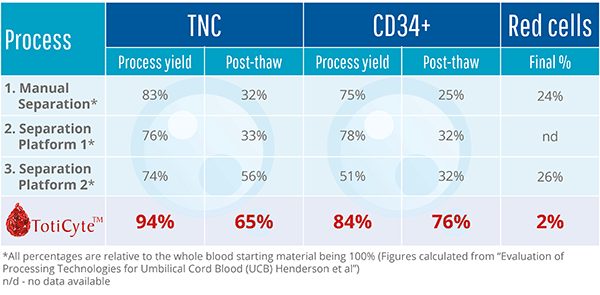
TotiCyte™ – the next generation of cord blood processing technology

The most important factors in determining a successful stem cell transplant are human leukocyte antigen (HLA) match and number of living (viable) cells available for treatment.
HLA is the finger print equivalent to see if the donor matches the patient. If they do not, then game over. However, if there is a good enough match, then 25 million total nucleated cells (TNC) per kg of bodyweight are required to give the patient the best chance of a successful stem cell transplant.
Many public cord blood banks apply a very high TNC threshold before they will store a cord blood unit for possible transplant use. Thresholds between 1.4 and 2.5 billion TNC increase the probability that the samples they process will be therapeutically useful.