Stem Cell Blog

Употребата на матичните клетки од папочна врвца рапидно се зголемува. Пред 10 години крвта од папочна врвца можеше да лекува околу 40 состојби, но денес таа бројка е над 80. Со нетрпение очекуваме нови терапии за болести и нарушувања како што се дијабет, аутизам и мозочен удар, можете да бидете во тек со најновите случувања во регенеративната медицина на нашиот блог за матични клетки.


cells4life_octopus_for_premature_baby-1000x675-1.jpg

22/01/2024 Blog

Sleeping inside an incubator might seem like a lonely way to start life, but now premature babies can enjoy some much-needed cuddly companionship from an early age.

Volunteers have begun crocheting soft octopuses for premature babies over the past few years, with research suggesting it can soothe their early life anxiety.

With more than 60,000 premature births in the UK each year, the project offers hope to parents while they are separated from their baby.

Why octopuses?

Cuddly octopuses – and more recently, jellyfish – emulate the shape of the umbilical cord and thereby evoke feelings of warmth and safety in premature babies.

What are the benefits?

Research in Denmark has found that squeezing these cotton tentacles has helped tiny patients to develop better breathing, more regular heartbeats, and even higher levels of oxygen in their blood.
Doctors report that babies are also less likely to pull on their monitors and tubes, which ensures they can receive all the medical attention they need.

How can I make a crocheted octopus?

Crocheting guides for making your own octopus or jellyfish are freely available online.
However, it is important to note that safety precautions must be taken. The stitching pattern must be tiny to prevent stuffing from escaping and the tentacles must be just the right size – around 22cm long.

Only 100% cotton can be used, and toys must be washed regularly at a temperature above 60°C to ensure they are sterile.

How can I donate a crocheted octopus?

Several voluntary groups are active around the world, particularly in the UK, USA, Denmark, Poland and Austria.

In the UK, Octopus for Preemies has more than 23,000 volunteers. The organisation provides toys to maternity wards across the country, and has found that both parents and babies benefit from the project.

Why is the umbilical cord so special?

The positive effect of these crocheted keepsakes reaffirms the importance of the umbilical cord, which links a baby with the placenta in the womb and pumps life-giving substances from mother to child.

Find out about the power of banking your baby’s umbilical cord blood and tissue.
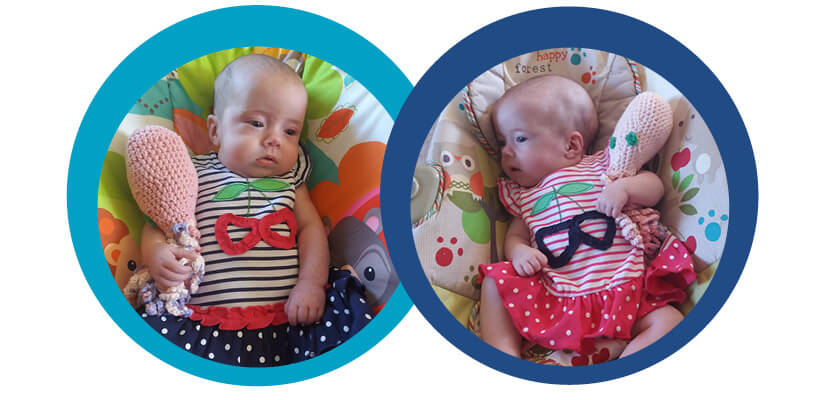
Since leaving hospital, premature twins, Eleanor & Isabelle continue to have a close bond with their crocheted octopuses.

Sources
https://stv.tv/news/features/1421112-cuddly-octopuses-help-scotland-s-premature-babies-feel-safe/
https://www.mirror.co.uk/lifestyle/family/how-knitted-octopus-toys-helping-9798842


Smaller-twins-in-crate-483x675-1.jpg

22/01/2024 Blog

Expecting a baby is exciting, let alone two or more, but there is a little more to think about when it comes to twins, not least when it comes to planning. Two car seats, two cots, a double pushchair not to mention the additional laundry and nappies! But what about cord blood banking – is it even possible? Will there be enough blood to collect?

The answer, is yes.

Cord blood collection for twins

Identical or fraternal, one placenta or two – cord blood banking fits around your birth plan and your pregnancy. Below are the top three questions asked by parents.

Do I need to bank cord blood for both twins?

This is one of the most common questions we hear, and we would always recommend you do.

Non-identical twins, are just the same as any other siblings except they happen to be born at the same time. Each is unique with their own DNA and a 1 in 4 chance of being a perfect match to the other. In contrast, identical twins will have identical DNA. However, the number of treatments available is dependent on number of stem cells, so it is important to collect as many as possible.

By storing for both twins you maximise the treatment opportunities available to your children.

Will there be enough cord blood with twins?

Twins tend to be smaller than single births as they share a womb, this, combined with smaller or a shared placenta can mean that the volume of blood available for collection can be lower.

Fortunately, Cells4Life offers a unique cord blood processing technology – CellsPlus, powered by TotiCyte. Unlike other cord blood banks, Cells4Life can process very small volumes of blood and it delivers 3x the number of cells at the point of treatment – making it equivalent to a much larger sample processed using any other system. Only Cells4Life is able to offer this service to parents expecting twins and triplets.

Will it be double the cost?

Not at all, twice the number of babies does not mean twice the price. We offer a 50% discount on the cost of cord blood processing for our Cells and Cells with Cord services for subsequent children in the same pregnancy. You can receive a personalised pricing breakdown from one of our advisors by calling 01444 873950.

Fraternal twins

Non-identical (dizygotic) twins occur when two eggs are fertilised by different sperm. Each baby will have a separate placenta, inner membrane (amnion) and outer membrane (chorion)

Identical twins

Monozygotic twins occur when one embryo splits in two. There are three different types of identical twins depending on what they share in the womb

Dichorionic diamniotic (DCDA) twins, account for almost a third of identical twins – each twin will have their own placenta, inner and outer membrane

Monochorionic diamniotic (MCDA) twins, share the same placenta and outer membrane but have their own amnion – this accounts for two thirds of identical twins.

Monochorionic monoamniotic (MCMA) twins, represent just 4% of identical twins and they share everything.


First-Aid-for-babies-1080x675-1.jpg

22/01/2024 Blog

Anxiety goes hand-in-hand with parenting. From the moment you leave the hospital with your bundle of joy, to your teenager going on their first holiday with friends or moving out of home.

And that anxiety can begin long before the birth of your baby. The list of things parents-to-be need can seem never-ending; from cribs, muslins and clothes to car seats and buggies. But one thing many parents may not realise is definitely worth investing in is a paediatric first aid class. The skills they will learn will stay with them for much longer than a changing bag or bouncy chair.

Every parent will benefit from investing in this type of course. It can do many things for you, beyond just teaching you how to react in an emergency.

For new parents, every little detail is critical and worrisome. A first aid class teaches parents how to spot and deal with everything from a fever to meningitis. Having this type of training can give a parent the confidence to make better decisions for the child in that moment. Instead of panicking and worrying about what to do, the parent knows how to spring into action to provide the individual with the care he or she needs in that second. This saves lives.

New babies are rarely far from their parents so it is likely they will be the first responders in times of emergency. This is especially important in time-sensitive situations such as choking, drowning, strangulation, or a bleeding wound when it’s crucial for you to act fast and act right.

A first aid class can also teach new parents about how to baby-proof their home, which is where many accidents occur. The living room or dining room is where most accidents happen but it is the stairs or kitchen where the most serious incidents take place. A class can help you prevent and deal with scalds and burns, poisoning by bleach or medicines, falls and choking.

It will also teach you about the less obvious dangers to consider such as how dummies can be a health risk and what to consider when using car seats.

Every child is bound to get hurt at some point because they are always on the go. Life is a big adventure, with so much to explore and examine. As your child learns about its surroundings, so should you learn how to protect them.

About Daisy First Aid:

Mother of three Jenni Dunman set up Daisy First Aid four years ago after she stopped her friend’s daughter from choking on a cookie in a cafe. Working as a police officer at the time, Jenni realised that many parents lacked the first aid skills she had and wanted to do something to help educate and empower them.

Jenni has grown her business from tabletop to a multi-award winning company. She is now considered a paediatric first aid expert, featuring in numerous publications and working with celebrity parents to promote the importance of this training.

Jenni says: “We train thousands of parents every year and when you get that call to say a parent saved their child’s life thanks to our class, that is the most unbelievably emotional feeling. We are all so passionate about the importance of first aid and absolutely love what we do.”

Daisy First Aid offers fun and fear-free first aid courses designed specifically for parents, grandparents and child carers. In a two hour class, which takes place in the attendee’s own home or local venue, the world of emergency first aid unfolds. Participants interact and learn the skills they need to save a life and to treat the most common accidents and emergencies with CPR, anaphylaxis, seizures and meningitis, just some of the issues covered.

Babies and breastfeeding are very welcome too.

https://www.daisyfirstaid.com/


22/01/2024 Blog

For over four years Cells4Life has offered the additional option of storing umbilical cord tissue stem cells alongside those found in the cord blood. But what is so special about these cells and why is it important to preserve them?

The benefits of storing umbilical cord tissue stem cells

More cell types
Cord tissue is one of the richest sources of mesenchymal stem cells available. These are the cells that are thought to have the most potential in the field of regenerative medicine.

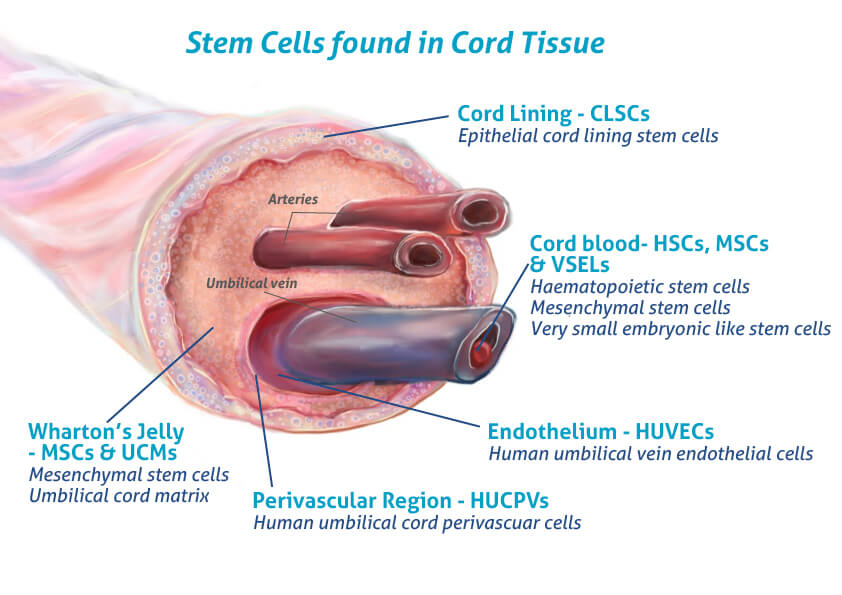
Umbilical Cord Stem Cells

Mesenchymal Stem Cells (MSCs)
The MSCs found in the ‘Wharton’s Jelly’ are more abundant and powerful than those in the cord blood and have huge potential for use in a wide range of regenerative therapies.
http://www.ncbi.nlm.nih.gov/pubmed/20187873

Human Umbilical Cord Perivascular cells (HUCPVCs)
The perivascular cells found in the umbilical cord are being investigated for bone formation and dermal tissue engineering.
http://www.ncbi.nlm.nih.gov/pubmed/25676366
http://www.ncbi.nlm.nih.gov/pmc/articles/PMC3055644

Human Umbilical Vein Endothelial Cells (HUVECs)
These cells are easy to culture and commonly used in a research setting for vascular biology – including inflammation, blood clotting and angiogenesis.
http://www.ncbi.nlm.nih.gov/pubmed/17237547

Epithelial Cord Lining Stem Cells (CLSCs)
CLSCs have proved effective in the treatment of difficult to heal human wounds such as diabetic ulcers, defects to the cornea and have demonstrated successful regeneration of the liver and heart in animal studies.
http://www.ncbi.nlm.nih.gov/pubmed/24636

Keep it in the family
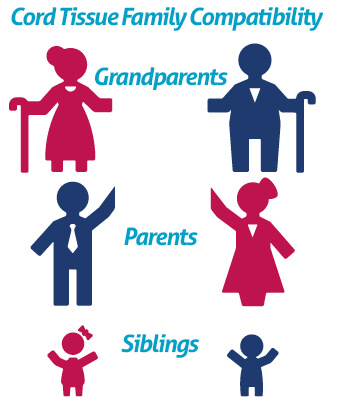
Not only will the umbilical cord tissue stem cells be a 100% match to your child – they could also be match to other members of the family too.

Readily available
One of the great advantages of umbilical cord tissue stem cells is the ease by which they can be collected. In the very unlikely event that there is any difficulty with the collection of cord blood, stem cells from the umbilical cord tissue will almost certainly still be available.

“Our umbilical cord tissue samples are processed and stored exclusively by Cells4Life here in the UK”

Cord Tissue Uses

Uses of umbilical cord tissue stem cells

Cord tissue is currently being investigated for use in the treatment of the following conditions:

• Alzheimer’s disease
• Aplastic anaemia
• Cardiomyopathy
• Cartilage repair
• Cerebral Palsy
• Connective tissue diseases
• Diabetes (type 2)
• Erectile Dysfunction

• Liver failure
• Multiple Sclerosis
• Myocardial infarction
• Osteoarthritis
• Ovarian failure
• Parkinson’s disease
• Psoriasis
• Retinitis pigmentosa

• Rheumatoid arthritis
• Sepsis
• Spinal cord injury
• Stroke
• Traumatic optic neuropathy
• Ulcerative colitis
• And many more…

“In 2014 Cells4Life became the first private cord blood bank to provide cord tissue for an experimental treatment of a skin condition at Guys and St Thomas’ NHS Hospital in London.”


22/01/2024 Blog

Down’s syndrome is a genetic disorder caused by an abnormality, involving chromosome 21. The condition results in impaired cognitive development and a distinctive physical appearance. Scientists don’t yet truly understand the underlying cause of Down’s syndrome and in 94% of cases it likely simply to have been a fluke of nature.

2 babies are born with Down's syndrome every day in the UK

In the UK, 2 babies are born with Down’s syndrome every day.

60,000 people in the UK have Down's syndrome

There are currently 60,000 people in Britain with the condition.

Test for Down's syndrome

There are 3 types of test for Down’s syndrome.

How can I test for Down’s syndrome?

Currently there are three main types of test available and they can be broken down into two categories: screening and diagnostic testing. The Combined Test and NIPT are screenings and indicate the risk of a baby having Down’s syndrome, whereas Amniocentesis and CVS provide a definitive diagnosis.

Combined Test
This test is available to all expectant mothers from 10-14 weeks of pregnancy and gives a result based on a combination of the mother’s age, an ultrasound scan, and a blood test. The Combined Test has a detection rate of 90%, however, 1 in 20 positive results will be false. This means 5% of parents are left worrying without reason and may evening undergo the far riskier Amniocentesis or CVS tests unnecessarily as a result.

Non-Invasive Prenatal Testing (NIPT)
This newer kind of test is not yet available on the NHS, however, it can be requested through private clinics. It involves a simple blood test that analyses cell free DNA found in the mother’s plasma. NIPT offers a detection rate of >98% and up to a 0.01% false positive rate, making it far more accurate than the Combined Test.

Chorion Villus Sampling (CVS)/ Amniocentesis
These invasive tests follow a positive Combined Test or non–invasive screening and involve passing a fine needle through the mother’s abdomen to collected a sample of cells from either the placenta or surrounding fluid. Whilst both tests deliver an accurate diagnosis of the condition they are not without risk – the procedure carries a 1% chance of causing miscarriage.

Non-invasive prenatal testing with Cells4Life

There are a variety of NIPT services available that test for Down’s syndrome and much more. These include Panaroma, Harmony, NIFTY and Genesis Serenity

Cells4Life offer the Panoroma test as it is the most accurate Down’s Syndrome screening available, with a detection rate of >99%. It is also screens for several conditions that other tests do not, including triploidy, molar pregnancy and vanishing twin, and is the only test to differentiate between maternal and fetal DNA, resulting in a significant reduction is false positives.

The Panorama screens for the following conditions:

Chromosome Abnormalities:

    • Trisomy 21 (Down syndrome)

    • Trisomy 18 (Edwards syndrome)

    • Trisomy 13 (Patau syndrome)

    • Triploidy

Chromosome Sex

Sex Chromosome Abnormalities:

  • Monosomy X (Turner syndrome)

  • Klinefelter syndrome

  • Triple X syndrome

  • XYY syndrome

Micro deletion

Microdeletions:

      • 22q11.2 deletion syndrome

      • 1p36 deletion syndrome

      • Prader-Willi syndrome

      • Angolan syndrome

      • Cri-du-chat syndrome

      • Gender of the Baby (optional)

Learn more about non-invasive prenatal testing and our test for down’s syndrome on on our information pages.

References


22/01/2024 Blog

Snow sport athletes are custom to ice cold weather, but now they are turning to a totally new type of freezing: the cryogenic preservation of their baby’s cord blood.

This once-in-a-lifetime opportunity enables parents to capture and store the building blocks a relatively new science known as regenerative medicine – stem cells. These cells are already being investigated in over 5,000 clinical trials to treat conditions like, Alzheimer’s, diabetes, arthritis, spinal damage and autism, and, one day, could even be used to grow replacement organs as they wear out. They are the future of medicine.

Umbilical cord blood is the youngest and most potent source of stem cells that a person will ever have, and it is also a perfect biological match. Cord blood can be easily and painlessly harvested from the umbilical cord and placenta after a baby is born and placed into long-term cryogenic storage. This means that it is readily available, as and when that child requires regenerative treatments throughout their lifetime.

Olympic skier Chemmy Alcott announced she had banked her new baby’s umbilical cord blood stem cells in January 2017. Chemmy was introduced to the regenerative properties of stem cells by her surgeon, following a leg break that required intervention. Both Chemmy and partner Dougie are world class skiers and self-confessed adrenalin junkies, meaning that there is a high chance that their son will follow in their footsteps. Injuries can be commonplace in high octane sports like skiing and the ability to repair and regenerate the body using stem cells is invaluable.

Chemmy joins Zoe Gillings, Team GB Snowboarder, who also chose cord blood banking for her new baby.

What’s more, regenerative medicine is not just a concept for the future – it is happening today. In fact, some of the biggest names in sport like Rafael Nadal and Christiano Ronaldo have already credited stem cell treatment as the reason for their recovery from what would otherwise have been career ending injuries.

From sporting injury, to life-threatening disease, stem cells have the potential to transform the way that we manage our health. By saving your baby’s cord blood, you ensure that they have access to this valuable resource, throughout their lifetime.

“I knew that there could be a whole new world of medicine my baby could access in the future…”
Zoe Gillings, Team GB Olympic Snowboarder


22/01/2024 Blog

You’ll spend nine months waiting and planning for baby’s arrival and when the big day arrives it will be one of the most important and special of your life. This is why we have designed our systems and processes to ensure that stem cell harvesting is quick, simple and safe, and does not get in the way of your birth plan or meeting your new baby when they arrive.

There is no step-by-step guide to how your labour will progress, so we offer a fully comprehensive 24 hours service to cover all eventualities:

  • Customer care – our advisors are always available out of hours to deal with emergencies or any urgent queries you may have

  • Phlebotomist – your dedicated technician is on call 24 hours a day to harvest your baby’s stem cells

  • Medical courier – our specialist courier service is available at any time, day or night, to pick up your baby’s cord blood and return it to Cells4Life for processing

  • Laboratory – our laboratory operates 24/7, 365 days per year to ensure that your baby’s stem cells will be processed as quickly as possible – this ensures a more viable cord blood sample

24 hour stem cell harvesting service

Who collects the cord blood?

Only a trained medical professional who is operating under Cells4Life’s Human Tissue Authority licence is able to undertake stem cell harvesting, which is why in most cases, we assign you with a one of our trained phlebotomists to carry out the collection.

Sometimes your doctor or midwife may also be licenced, in which case you will be able to choose whether the collection is performed by them, or one of our phlebotomy team.

What happens when I go in to labour?

At the first signs of labour, you should contact your phlebotomist to let them know that baby will be arriving soon and update them with any significant changes in the progression of your birth. They will use their extensive experience to decide when to leave for the hospital, ensuring that they are set-up and ready in time for the third stage of labour and subsequent cord blood collection. The collection process then takes place in a separate room, giving you and your family uninterrupted time to get to know your new baby.

How does it get back to the lab?

With stem cells – time is of the essence. We aim to process our UK cord blood samples within 24 hours of collection to ensure the greatest number of living cells. This is why our dedicated medical courier and laboratory are available 24 hours a day, every day of the year.

What if I need more help?

Our customer care team is available to deal with the unexpected or emergencies 24 hours a day. Whether labour has come on suddenly, you have left your cord blood collection kit at home, or anything else – our advisors are on hand to help in whatever they can. We can almost always make sure a cord blood collection takes place, no matter how little time we have to organise everything.

Stem cell harvesting is a simple, safe & painless process and our 24-hour support ensures we are here to help whenever baby decides to arrive.


small-black-and-white-sleeping-baby-1200x800.jpg

22/01/2024 Blog

As Cord Blood Awareness Month draws to a close we will be taking a look at the differences between banking cord blood in a family bank and donating cord blood to a public bank.

Because cord blood banking in the UK does not yet have the profile it deserves, there are still many misconceptions surrounding the different ways in which you can store your baby’s cord blood.

Cord Blood Facts:

•The UK banks less than 1% of the cord blood available from over 800,000 births each year, Singapore banks 25%.

•Up to 70% of people who need stem cell/bone marrow transplants will not find a match.

•Your baby’s cord blood is a perfect stem cell match for your baby.

•80% of transplant requests would be met if the UK saved just 50,000 cord blood units.

What is Cord Blood Donation?

When you donate your baby’s cord blood you are giving it away; it could be used for a variety of things. It could be used for research to advance or discover therapies for illness or disease.  It could also be used to save the life of a stranger in need of a stem cell transplant.  However, you would have no say in how the cord blood you donated is used; that would be the decision of the cord blood bank you donated it to.

Donating cord blood in the UK is not an option for most women.  This is primarily because cord blood donation is only routinely available at 10 UK hospitals. During busy periods it may not be possible for your baby’s cord blood sample to be collected.

The criteria for donating cord blood is strict; it is not compatible with home births, delayed clamping or with any birth where the baby is born before 37 weeks exactly.  If you meet the criteria and are able to donate cord blood, once it has been donated it is irretrievable.  Cord blood is donated anonymously, which means should your baby need it in the future you will not have access to it.  However, in the event your baby needs a stem cell transplant in the future, the best possible match would be found via the public registry.

It is also worth considering that cord blood which is donated is not used for the wide variety of treatments that privately stored cord blood is.  Donated cord blood is generally limited to the treatment of blood disorders, metabolic conditions, and cancers.  Regenerative therapies are not currently available with donated cord blood units.

However, while cord blood donation has restrictions to how it can be used, it is free of change and could still be used to save the life of someone in need.

What is Family Cord Blood Banking?

Family banking is a completely different service to cord blood donation.  When choosing to bank your baby’s cord blood in a family bank it will be stored for the exclusive use of your baby and your baby’s family.  You will have complete control over your baby’s cord blood sample.  When choosing to store cord blood in a family bank, you can choose a variety of settings to give birth.  As family cord blood banks act as third parties and have a third party arrangement with many hospitals, you can choose to give birth in over 200 NHS and private hospitals.  Family banking is also compatible with caesarean sections, home births, multiple births and even with births where the mother wishes to delay cord blood clamping.

In addition to flexibility when giving birth, family cord blood banking also offers a wider variety of uses.  Cord blood stored in a family bank can be used in regenerative therapies.  It is worth noting that 82% of autologous cord blood therapies currently performed are for the treatment of brain injuries including traumatic brain injuriesacquired brain injuries and cerebral palsy [1].

Family banking remains the only way to ensure access to the full range of approved therapies and clinical trials.

While there is a charge for family banking this is negligible for the peace of mind and medicinal access that it offers.  Currently Cells4Life’s Cells+  package equates to less than £65 per year for 25 years storage, you can find out more here.


22/01/2024 Blog

October is Breast Cancer Awareness Month.  Here we look at breast cancer, the causes, the symptoms and how stem cells are being used in the fight against the illness.

Each year in the UK approximately 55,000 people are diagnosed with breast cancer.  Breast cancer is often associated with women as it is predominantly women who are diagnosed with the illness but breast cancer also occurs in men too with around 350 men being diagnosed each year [1].

Breast cancer is the most common cancer in the UK and while more people are being diagnosed but in contrast survival rates are increasing; this could be because of improved treatment and earlier detection[1].

Surprisingly, breast pain isn’t usually a symptom of breast cancer.  Symptoms of breast cancer include:

  •  a lump or area of thickened tissue in either breast

  •  a change in the size or shape of one or both breasts

  •  discharge from either of your nipples (which may be streaked with blood)

  •  a lump or swelling in either of your armpits

  •  dimpling on the skin of your breasts

  •  a rash on or around your nipple

  •  a change in the appearance of your nipple, such as becoming sunken into your breast[2]

Treatment of breast cancer can vary, breast cancer is treated on a case by case basis.  In cases where intensive chemotherapy is used, a stem cell transplant may be required to replace damaged bone marrow.

[1] https://www.breastcancercare.org.uk/news/media-centre/facts-statistics

[2] http://www.nhs.uk/Conditions/Cancer-of-the-breast-female/Pages/Symptoms.aspx


22/01/2024 Blog

To celebrate International Women’s Day, we’re taking a brief look at the career of one of the most pioneering women in modern medicine; Dr. Joanne Kurtzberg.

Joanne Kurtzberg & the first cord blood transplants.

Joanne KurtzbergDr. Joanne Kurtzberg is a researcher at Duke University, she is a pioneer who is advancing the development of stem cell therapies, particularly those using umbilical cord blood.
In 1988 Joanne Kurtzberg was involved in the world’s very first umbilical cord blood stem cell transplant [1] which treated a boy for Fanconi Anaemia using his sister’s cord blood. Then in 1993, Kurtzberg went on to perform the first successful unrelated cord blood transplant [2].  Since that first cord blood transplant in 1988, over 35,000 cord blood transplants have been performed [3].

Joanne Kurtzberg, advancing the use of cord blood.

Today Kurtzberg is advancing the application of umbilical cord blood treatments for a variety of illnesses including blood disorders, genetic diseases and brain injuries. Speaking to Duke University, Kurtzberg said “I’ve learned that after a cord blood transplant, donor cells help heal the brain. My current research is focused on finding ways to use cord blood cells to help children with Krabbe disease, MLD, ALD, Hurler syndrome and other leukodystrophies. I am also developing new treatments for children with birth asphyxia, cerebral palsy and autism as well as for adults with stroke [1] .”
Currently there is no cure for cerebral palsy, however, in 2012 Kurtzberg began to enrol patients with cerebral palsy who had banked their cord blood at birth in a clinical trial. The pioneering trial aimed to investigate the application of cord blood in treating the illness. Preliminary results of the trial have showed improved brain development and motor skill in 70% of participants.
In 2014 a $15 million grant was given to Kurtzberg and her team to help fund a $41 million 5-year project. The money is to fund research to investigate the application into stroke, autism, and other brain disorders. The results of this research are eagerly anticipated.
Kurtzberg’s research has only been possible because families choose to store their baby’s cord blood in family banks. Kurtzberg has made, and continues to make, a valuable contribution to medicine and the advancement of stem cell research. Thank you, Dr. Kurtzberg.

[1] https://www.dukemedicine.org/find-doctors-physicians/joanne-kurtzberg-md
[2] http://ccbb.duke.edu/about-cord-blood/history-cord-blood
[3] http://www.nationalcordbloodprogram.org/